The Best Toddler Books for Montessori-Style Learning
The Best Toddler Books for Montessori-Style Learning
Books are a very important part of our children’s learning in our household. We put a strong emphasis on reading daily, and I try to make it enjoyable for my kids so that they fall in love with reading. I’ve started implementing what I call “couch time” for my toddlers when they get too rowdy. They know it means to pick a stack of books from their bookshelf and situate themselves on the couch for a while to calm down and reset their bodies.
Choosing the best toddler books for Montessori-style learning can feel overwhelming when there are so many children’s books available. The good news is that finding Montessori-aligned books doesn’t require a complicated system—just an understanding of what makes a book supportive of a child’s natural development. Whether you’re building a small shelf for a Montessori baby or adding new books for older toddlers, the right selections can nurture curiosity, independence, and a lifelong love of books.
In this guide, we’ll explore what makes a montessori-friendly book, why certain classic books still fit beautifully into Montessori homes, and provide a list (at the end of this post) of my favorite books that support learning in a gentle, child-led way.
What Makes a Book Montessori-Friendly?
Before jumping into specific book recommendations, it helps to understand the Montessori principles behind choosing books for young children. The Montessori way focuses on reality, independence, and meaningful learning experiences that connect to the real world.
According to Montessori educators, children in the early stage of development—birth to age six—learn best through real-life experiences and realistic materials. Books that show people, animals, and objects from everyday life help build understanding and vocabulary during this sensitive learning period. (montessori.org)
Here are a few key features to look for in montessori-style books:
- Real pictures or realistic illustrations that reflect the real world
- Simple language that matches a child’s age
- Durable formats, such as a sturdy board book for little hands
- Clear, uncluttered pages without overwhelming distractions
- Topics rooted in real life, nature, and daily routines
The Montessori belief is that grounding children in reality first helps them understand more abstract concepts later. While fairy tales can be fun, Montessori encourages focusing on realistic subjects during the toddler years and saving more imaginative stories for older children.
Why Books Matter in Montessori Learning
Books play a central role in Montessori homes and classrooms. Dr. Montessori believed that the environment shapes learning, and books are an essential part of that prepared environment.
Reading together is a great way to:
- Build vocabulary naturally
- Encourage independence
- Support concentration
- Foster imagination rooted in understanding
- Develop early literacy skills
Montessori books also help children develop a deep connection to the natural world. Books featuring animals, plants, weather, and daily routines give young kids meaningful experiences they can recognize in their own lives.
Even a simple flap book or wooden book can become a treasured learning tool when chosen thoughtfully.
Best Montessori Books for Toddlers
Below are some wonderful books that fit beautifully into Montessori-style learning environments. These include beloved classic books, realistic nonfiction options, and beautifully illustrated books that support early learning.
Real-Life and Everyday Learning Books
These books focus on real pictures and familiar activities—perfect for Montessori baby shelves and younger children.
First 100 Words Books
Books featuring real pictures of everyday objects are ideal for young toddlers. These types of books introduce vocabulary through realistic imagery, which supports language development during the early stage. I picked up this Bible words book a few years ago for my toddlers. This animal one will introduce your baby and toddler to a vast world of words.
Many Montessori parents consider these among their favorite books because they allow children to connect words with objects they see in daily life.
These are especially helpful for:
- Montessori baby learners
- Younger toddlers
- Introducing different colors
- Building early vocabulary
Baby Touch-and-Feel Books
Touch-and-feel books that include real animals or textures can support sensory learning. I got this See, Touch, Feel book for my daughter’s first Christmas and it was a big hit with both of my kids.
Montessori encourages hands-on experiences, and tactile books help reinforce the connection between touch and understanding. Some Montessori-aligned board book options use real photographs and textures to introduce animals and nature in a sensory-rich way. (HeyMontessori)
These books are a fun way to engage little hands and encourage independent exploration. I especially love the Priddy books for young babies. We have quite a few Priddy books on our bookshelves here at home.
Classic Books That Fit Montessori Learning
Many classic books are beautifully illustrated and grounded in realistic themes. These classic books have stood the test of time and remain excellent Montessori-friendly book choices.
Brown Bear, Brown Bear, What Do You See? by Eric Carle
Often shortened to brown bear, this beautifully illustrated book introduces repetition, rhythm, and animals in a simple, engaging format.
Why it works:
- Introduces animals using bold visuals
- Reinforces memory through repetition
- Teaches different colors
- Encourages participation from young kids
This is a great book for toddlers who enjoy predictable patterns and interactive reading.
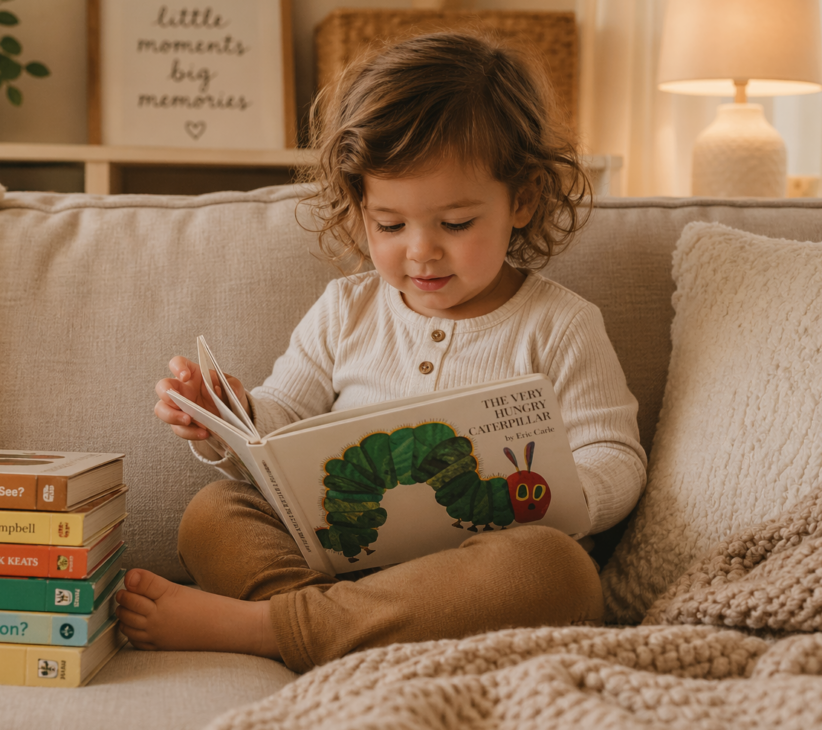
The Very Hungry Caterpillar by Eric Carle
The very hungry caterpillar remains one of the most beloved Montessori-style books.
It connects learning to the natural world through the life cycle of a caterpillar, introducing counting, days of the week, and healthy food choices.
Why it works:
- Teaches early math skills
- Introduces nature-based learning
- Supports sequencing skills
- Encourages curiosity about growth and change
This book is especially meaningful for older toddlers beginning to understand cause and effect.
Any of the other Eric Carle books as well are wonderful books for children! I love the artwork in all of his books and the stories are perfect for little minds to be able to follow along and understand. This set would be perfect for a baby shower gift!
The Snowy Day by Ezra Jack Keats
Written by Ezra Jack Keats, The Snowy Day is a beautifully illustrated book that captures a child exploring snow in the winter.
Why it works:
- Shows real-life seasonal experiences
- Encourages outdoor exploration
- Builds vocabulary connected to weather
- Reflects everyday childhood moments
Books like The Snowy Day connect deeply to children’s experiences, making them excellent Montessori-aligned books.
Books about the Natural World
Montessori education emphasizes respect for nature. Books that highlight animals, plants, seasons, and outdoor environments are excellent choices for Montessori-style learning.
Look for books featuring:
- Animal habitats
- Nature poem collections
- Weather changes
- Gardening
- Life cycles
Books about the natural world nurture curiosity and help children develop empathy toward living things.
These books are particularly valuable for:
- Young preschoolers
- Older toddlers
- Nature-focused Montessori shelves
Books about Everyday Life
Daily routine books are an important part of Montessori learning because they reflect familiar experiences.
Look for stories about:
- Cooking
- Cleaning
- Getting dressed
- Visiting a construction site
- Caring for pets
These books help children understand their role in the household and build independence.
Books that highlight practical life activities align closely with Montessori principles and support emotional confidence.
Books for Social and Emotional Development
Social development is another key part of Montessori education. Books that show real people expressing emotions help toddlers learn empathy and communication skills.
Examples include books showing:
- Facial expressions
- Friendship
- Helping others
- Cooperation
Some Montessori-aligned books use photographs of real babies showing emotions, helping children recognize feelings in themselves and others. (Montessori For Today)
Choosing Books Based on Your Child’s Age
Selecting books based on your child’s age ensures that reading stays enjoyable and developmentally appropriate.
Montessori Baby (0–12 Months)
Focus on:
- Black-and-white images
- High-contrast patterns
- Real pictures
- Simple board book formats
At this early stage, babies are learning through visual stimulation and sensory exploration.
Younger Toddlers (12–24 Months)
Choose books with:
- Real pictures
- Simple words
- Familiar objects
- Durable pages
This is when vocabulary development grows rapidly, making books an essential learning tool.
Older Toddlers (24–36 Months)
Look for:
- Short stories
- Sequencing concepts
- Daily routines
- Nature-based themes
At this stage, children begin to grasp more complex ideas while still benefiting from realistic content.
Should Montessori Homes Avoid Fairy Tales?
One common question about Montessori-style books is whether fairy tales should be avoided.
The Montessori belief suggests delaying fantasy until children can clearly distinguish between reality and imagination. During the early years, focusing on realistic stories helps children build a solid understanding of the world around them. (montessori.org)
That said, many families still enjoy fairy tales occasionally—especially as children approach preschool age.
The best way to approach fantasy is to:
- Prioritize realistic books first
- Introduce fantasy gradually
- Choose stories that still offer meaningful lessons
Building a Montessori Book Collection on a Budget
Creating a Montessori-inspired bookshelf doesn’t have to be expensive.
Here are some simple strategies:
Buy Secondhand Books
A secondhand book is often just as valuable as a brand-new one.
Look for gently used books at:
- Library sales
- Thrift stores
- Community swaps
Many families find high-quality Montessori-friendly book options at a fraction of the cost. I’ve started going straight to the book section when I visit a thrift store. I’ll look at every single kids’ book there and I usually find a few books every time I go. The reason I go to the book section first is to find a book for my kids to look at in the cart while I browse the rest of the store. Parenting hack for you 😉
I also just found The World of Peter Rabbit book set on Facebook Marketplace for half of what it costs on Amazon. So definitely check around for the best prices you can!
Rotate Books Regularly
Instead of filling shelves with dozens of books, rotate a small collection.
Benefits include:
- Renewed interest in familiar books
- Less clutter
- Increased focus
Even a small shelf of carefully selected Montessori books can provide a lot of information and learning opportunities. I especially like to make sure that I rotate out the seasonal books so we aren’t reading Christmas books in August and getting sick of them too soon.

Encouraging a Love of Books the Montessori Way
Helping toddlers develop a love of books doesn’t require complicated systems—just thoughtful choices and consistency.
Here are a few Montessori-inspired tips:
Create a Child-Level Bookshelf
Display books with covers facing forward so children can easily choose what interests them. My husband built a built-in bookshelf in our kids’ room and my kids have easy access to all of their books. I’m slowly teaching them how to see which books are similar so we can keep the bookshelf organized and keep all the books by the same author together on the shelf.
This encourages:
- Independence
- Decision-making
- Confidence
Read Slowly and Naturally
Allow time for children to:
- Ask questions
- Point to pictures
- Explore pages
Reading should feel like a calm, connected activity—not a rushed task.
Let Children Handle Books
Durable formats like a board book or wooden book allow children to explore books independently without fear of damage. Especially with babies, you want to make sure you give them board books or these books that are indestructible.
This supports motor development and responsibility.
Montessori Books That Grow With Your Child
Some books remain favorites for years, transitioning from toddlerhood into preschool. My daughter has been enjoying the Little House on the Prairie books. She’s only 2 years old, but she really enjoys sitting down to listen to me read these books to her. And I know as she grows, she’ll still love them, and one day, she’ll be able to read them herself.
The Good Dog, Carl books are a new find for us from our local thrift store! Both of my toddlers love them. These wordless books really encourage your child to imagine what is happening in the pictures and I love watching my kids sit down and “read” these books with each other. I think these books will be a hit for them for many years.
Final Thoughts on Montessori Toddler Books
Choosing Montessori-style books is about more than building a collection—it’s about supporting your child’s natural curiosity and development.
When selecting books, remember the core Montessori principles:
- Focus on reality first
- Choose realistic images
- Match the books to your child’s age
- Encourage independent exploration
- Support learning through real-life connections
Dr. Montessori believed that children thrive when surrounded by meaningful materials that reflect the world around them. Thoughtfully chosen books create opportunities for discovery, language development, and imagination grounded in understanding.
With the right montessori-friendly book choices, you can nurture curiosity, strengthen family connections, and inspire a lifelong love of books—one page at a time.

Here is my list of some of the books that we have and love:
The Seasons of Arnold’s Apple Tree
Frog and Toad books
Little Bear books
Good Night, Good Night Construction Site books
Sandra Boynton books
Mike Mulligan and His Steam Shovel