Butterfly Crafts for Preschoolers
Butterfly Crafts for Preschoolers:
Fun Butterfly Activities for Little Hands
My toddler girl has been into butterflies for the last few months. We got to go to a butterfly garden and she was in awe of seeing butterflies flying around, and she even got to feed them!
Doing crafts with my kids has been so fun lately. They’re getting more into our daily craft time and I’ve been enjoying branching out and trying some new things with them. These butterfly crafts and hands-on butterfly activities are a great way to build fine motor skills, spark curiosity about the natural world, and make your butterfly unit truly magical.
Whether you’re a parent, caregiver, or one of the many creative preschool teachers planning a spring theme, you’ll find a variety of fun activities, adorable crafts, and simple art projects below that fit right into your lesson plans. The butterfly theme is timeless — it captures the imagination of young children and connects beautifully to science, art, and literacy learning.
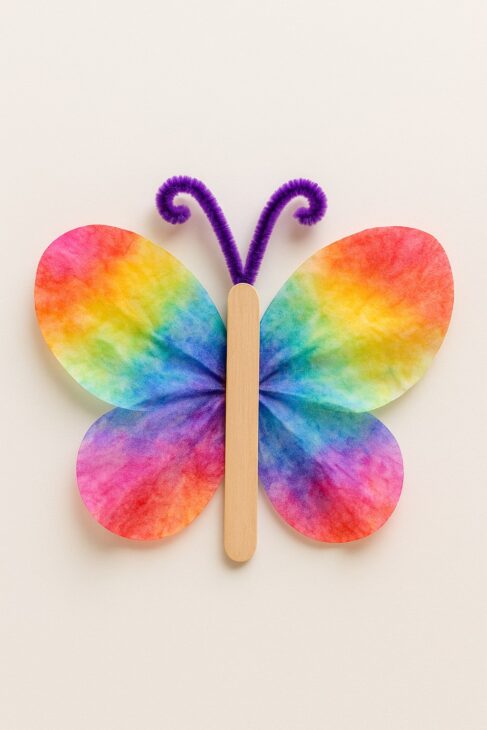
1. Coffee Filter Butterflies – A Simple Butterfly Craft
Coffee filter butterflies are one of the easiest and most beautiful butterfly crafts for preschoolers. They require only a few simple materials — coffee filters, pipe cleaners, clothespins or craft sticks, and washable or paint markers.
Here’s how to make them:
- Flatten a coffee filter on a table or tray.
- Invite children to decorate the filter with different colors of markers or watercolor paints.
- Lightly mist it with water and watch the colors blend together to form colorful butterfly wings.
- Once dry, pinch the center of the filter, wrap a pipe cleaner around the middle to form antennae, and clip it with a clothespin or glue it to a craft stick to create the butterfly body.
This easy butterfly craft supports fine motor development as little hands twist, fold, and decorate. It’s also a wonderful opportunity to talk about symmetry, color mixing, and patterns.
Display your beautiful butterflies on a classroom bulletin board, hang them in the dramatic play area, or even take them outside to your butterfly garden. Preschoolers love seeing their artwork fluttering in the breeze, and it’s a great way to bring art and nature together.
2. The Very Hungry Caterpillar and the Butterfly Life Cycle Craft
No butterfly unit is complete without The Very Hungry Caterpillar by Eric Carle. This favorite emergent reader introduces young children to the life cycle of a butterfly in a way that is colorful, engaging, and perfectly suited to preschoolers. My kids have loved this book and honestly, it’s one of my favorite books too. I love the illustrations!
After reading the story, invite children to create their own butterfly life cycle craft using paper plates, tissue paper, and contact paper. Divide the plate into four sections to represent each stage of the life cycle — egg, little caterpillar, chrysalis, and butterfly.
Use different materials to represent each stage:
- Eggs: small pasta shells or pom-poms
- Caterpillar: green tissue paper balls or pipe cleaners
- Chrysalis: rolled brown paper or green fabric
- Butterfly: coffee filter wings or colorful paper cutouts
Encourage children to label each stage of the life cycle with paint markers or crayons. This simple project reinforces sequencing, vocabulary, and science concepts while giving young kids a chance to connect reading with real-life learning.
This activity also supports literacy skills, fine motor skills, and language development. Children can retell the story using their craft or act out the life cycle in the dramatic play area — a fun way to combine storytelling with pretend play.
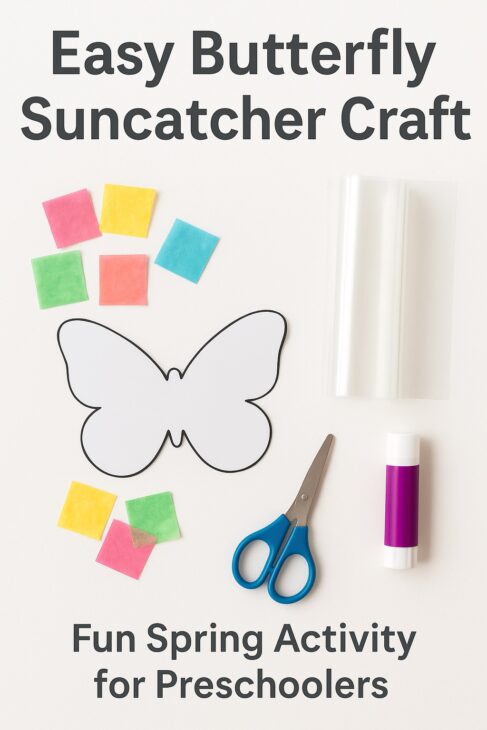
3. Easy Butterfly Suncatcher Craft
When the spring sun shines, it’s the perfect time for an easy butterfly suncatcher craft. This project only requires contact paper, tissue paper, and a butterfly shape cutout.
Lay a sheet of clear contact paper sticky side up and place a butterfly outline on top. Invite children to fill the butterfly wings with small pieces of tissue paper in different colors. Cover it with another piece of contact paper, then cut around the edges.
Hang your finished butterflies in the window to catch the light. The result is a collection of colorful butterflies that make any classroom sparkle.
This simple butterfly craft encourages creativity, builds fine motor skills, and brightens up rainy days. It’s one of those fun activities that works well with both younger children and older pre-k students.
4. Butterfly Matching Game – Build Math and Literacy Skills
Turn your butterflies theme into a learning opportunity with a butterfly matching game. This can be a printable activity or a DIY classroom project.
Create butterfly cards with matching wings or patterns to strengthen visual discrimination and number recognition. You can also use free printables from your favorite teacher resource sites or create your own with paint markers and cardstock. Here is a link for a matching set of beautiful butterfly cards.
Try a few variations:
- Match butterflies by color or pattern for younger children.
- Match butterflies with numbers to dots for early math skills.
- Match letter C butterflies with caterpillars to reinforce literacy activities.
Games like this are a fun way to build fine motor development, math skills, and social skills. They also make excellent center activities for small groups or early finishers.
For pre-k printables club members, this type of activity is perfect for extending the butterfly unit and supporting differentiation among kids of all ages.
5. Butterfly Sensory Bin and Pretend Play Ideas
A butterfly sensory bin is a fantastic way to provide sensory play and hands-on exploration. It’s simple to create using green fabric for grass, plastic bags as cocoons, artificial flowers, and small toy butterflies.
Invite children to use tweezers or tongs to “rescue” butterflies or move little caterpillars through the different stages of the life cycle. You can also add scoops, containers, or butterfly-shaped counters for counting activities.
This type of sensory play encourages language development, imaginative play, and fine motor control. It’s also a calming, engaging way for little kids to connect with the butterfly theme.
To extend the learning, add butterfly kits so children can watch real butterflies emerge. Observing their own butterflies is a powerful way to connect art, science, and real-life experience.
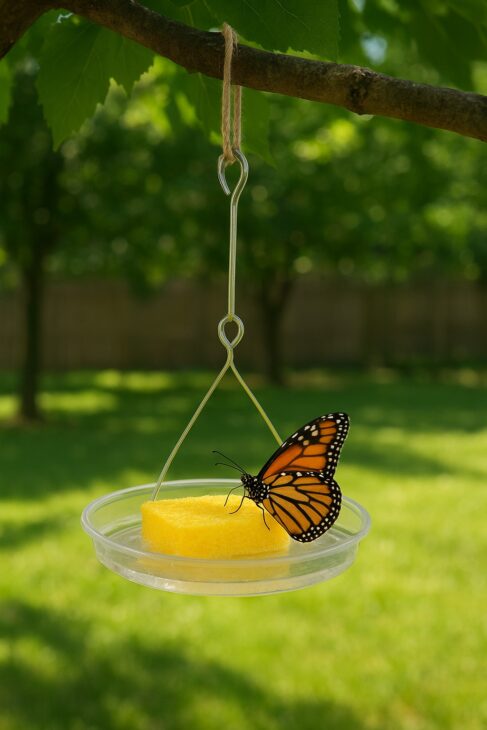
6. Easy Butterfly Feeder – Connecting to the Natural World
One of the most exciting parts of a butterfly unit is connecting art projects to nature. An easy butterfly feeder is the perfect way to help preschoolers experience the natural world firsthand.
To make one, use simple materials like a shallow dish, a sponge, sugar water, and string. Hang it outside near flowers or your butterfly garden and wait for visitors. Children can observe the butterflies up close and talk about what they notice — colors, patterns, and the way butterflies use their long tongues to drink nectar.
It’s an amazing thing for young children to see the connection between what they’ve learned and the world around them. This real-life experience encourages curiosity and respect for living things.
7. Butterfly Books and Literacy Activities
Books are the heart of any butterfly theme. Visit your local library to find nonfiction books and stories about butterflies, caterpillars, and gardens. In addition to The Very Hungry Caterpillar, try pairing your crafts with a nonfiction book about the life cycle of a butterfly.
Follow up your reading with literacy activities such as sequencing cards, labeling the butterfly body, or matching butterfly words and pictures. Children can also create their own emergent readers about butterflies using free printables or blank mini-books.
Reading and crafting together is one of the best ways to support literacy skills, language development, and comprehension. It helps young kids connect what they see in books to what they create with their hands.
8. Extend Your Butterfly Theme with Different Activities
Once your students are captivated by butterflies, the possibilities for exploration are endless. Extend your butterfly unit with a variety of art projects and hands-on activities:
- Butterfly shape puzzles to develop fine motor skills and shape recognition
- Butterfly life cycle posters for your bulletin board or science center
- Contact paper collages for little hands to explore textures and layering
- Simple butterfly crafts using tissue paper, craft sticks, or paint markers
- Butterfly matching games to build memory, math, and letter recognition
You can even turn your classroom into a mini butterfly garden or set up a dramatic play area where children pretend to be little caterpillars turning into butterflies.
If you’re part of a teaching community like the pre-k printables club, look for butterfly kits, free printables, and lesson plans to help organize your butterfly-themed activities. These resources make it easy to prepare engaging, developmentally appropriate activities for all learners.
9. Butterfly-Themed Math and Science Extensions
Butterflies offer rich opportunities for integrating math and science. Try measuring and comparing the size of different butterflies, sorting them by color or pattern, or counting butterfly wings.
Create a graph showing the number of butterflies spotted in the garden, or use art to explore symmetry by painting one side of a butterfly and folding it to print the other. These math and science connections deepen understanding and show children how learning happens everywhere — even in nature.
Discussing the life cycle of a butterfly also helps children understand change and growth, connecting the concept to their own experiences as they learn and develop.
All butterfly crafts and butterfly-themed activities shared here are for educational use under standard terms of use. They’re designed to be safe, age-appropriate, and adaptable for classrooms or home learning settings.
When planning your butterfly unit, keep these tips in mind:
- Offer a mix of art, literacy, and science-based butterfly activities.
- Encourage independence by letting children choose their own colors and materials.
- Display finished crafts proudly to build confidence and ownership.
- Incorporate vocabulary like butterfly body, caterpillar, chrysalis, and life cycle into discussions.
By combining creativity with exploration, preschool teachers can nurture fine motor development, language skills, social growth, and curiosity about the natural world — all within a butterfly theme.
The fascinating world of butterflies offers endless opportunities for creativity, science, and discovery. These easy butterfly crafts and fun activities are the perfect way to celebrate spring, encourage fine motor skills, and help your little caterpillars transform into confident creators of beautiful butterflies.
Whether you’re making coffee filter butterflies, reading The Very Hungry Caterpillar, or learning about the life cycle of a butterfly, these simple butterfly crafts are a wonderful addition to any preschool theme.
With just a few simple supplies, a little imagination, and a classroom full of curiosity, you can create beautiful butterfly masterpieces that your young children will remember for years to come. So gather your craft sticks, pipe cleaners, and tissue paper — and get ready for a great time exploring the amazing world of butterflies.
BLOG POSTS SIMILAR TO THIS ONE:
- “Spring Time Paper Plate Crafts for Kids {with little prep work for you!}” — This post presents a curated collection of simple paper-plate crafts ideal for young children. All projects use everyday materials you probably already have and require minimal setup. (Six Clever Sisters)
- “10 Fun Mother’s Day Cards that Kids Can Make” — This post offers 10 creative card-making ideas for kids, including one featuring a “Mother’s Day Butterfly Card.” (Six Clever Sisters)
Some of the links on sixcleversisters.com are affiliate links that pay a commission if a purchase is made. Six Clever Sisters, LLC is a participant in the Amazon Services LLC Associates Program, an affiliate advertising program designed to provide a means for sites to earn advertising fees by advertising and linking to amazon.com.